







 |
| |
|
| Premier Wen Jiabao Encourages SIP to Pioneer in Reform and Opening-up |
|
|
 |
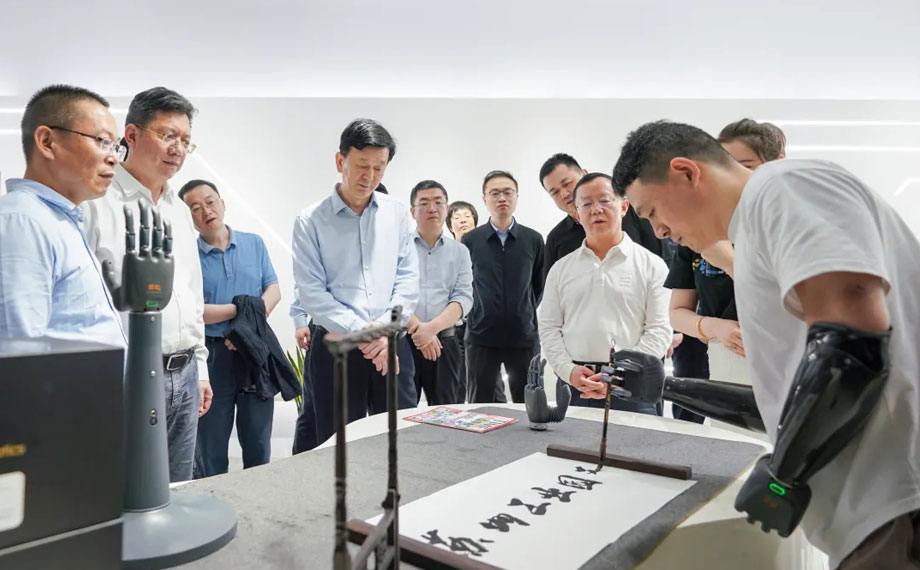
Premier Wen Jiabao visited Suzhou Institute of Nano-Tech and Nano-Bionics (SINANO) at Chinese Academy of Science (CAS) in Suzhou Industrial Park (SIP) on December 19, discussing with local officials and young researchers about Chinese nano-tech industry and its future.
|
|
After seventeen years of continuous development, Suzhou Industrial Park, an important cooperation project between China and Singapore with a total area of 288 square kilometers, has realized steady economic growth and the average GDP per permanent resident in the area has reached 35,500 US dollars.
On the morning of December 19, Premier Wen Jiabao visited SIP. After talking to the researchers at Suzhou Institute of Nano-Tech and Nano-Bionics (SINANO) at Chinese Academy of Science (CAS) on nano-tech industry, the state leader met with the management of some local companies.
Ma Minglong, Standing Committee Member of CPC Suzhou Municipal Committee and Secretary of SIP CPC Working Committee, told the premier that the development of SIP had three distinct features. The first is the visionary plans that haven't changed much during past 17 years. The second is its streamlined and highly efficient administration, which is a practice based on the belief of "small government, big society". The third is innovation, which is the reason why SIP is able to cope with changing environment and to realize sustainable growth.
Secretary Ma said SIP was at a crossing right now and needed second boost. In order to achieve this, local government should promote intensive development and emphasize innovation instead of investment, talents instead of ordinary labors. The mission is to |
build a hi-tech park with international competitive edges, a business area featuring sustainability, and a new city district where people can lead a healthy and happy life.
Premirer Wen said he was glad that SIP had learned many useful things from the cooperation partner and, more importantly, had injected something new and innovative of its own. The state leader encouraged local officials to pursue further reforms and more opening-up, for this can make resource allocation more rational and people more initiative, which would guarantee sustainable growth in future.
Wen then said he was more ambitious and was for an integrated development plan in south Jiangsu Province to cultivate an industrial cluster of high technologies, environmental protection, and modern services, and at the same time also a livable area with beautiful natural views and profound cultural heritages. This area should be the frontier opening to the outside in the province and even in the country, he said, and Suzhou Industrial Park should be a pioneer in this campaign.
At the meeting, President Chen Linsen of SVG Optronics said R&D and commercialization played important roles in micro-nano industry, for this was the foundation for healthy growth of rising sectors.
The premirer agreed with him and said that, without commercialization, research results were of limited value and nothing more than a beautiful vase for decoration. Researchers needed the support from companies, he said, and China needed top talents like Jobs as well as popular brands like Apple.
"Where does our confidence come from in realizing steady and rapid economic growth?" "From the youth standing in front of me and from technological innovation," answered Premirer Wen. "We should have the technological patents that others don't have and create better brands by promoting competitiveness, reducing cost, and improving efficiency so as to take initiatives in the world market." |
| |
Excerpts from Reports by Xinghua News Agency
December 20, 2011 |
| |
| Premier Wen Jiabao Visits Suzhou Industrial Park |
| |
According to the report of National News by China National Radio (CNR), the premier said that technology and people are the keys to solve new problems and difficulties of economic development. The State Council issued a document in 1994 urging SIP to learn from the successful experiences of Singapore with independent judgment according to the specific conditions of China. After 17 years of continuous efforts, SIP has realized rapid growth and accumulated rich experience. It has harvested the initial results of economic transformation and becomes a National Nano-Tech Industrialization Base.
Premier Wen sat down with local government leaders and company executives during his visit. Secretary Ma Minglong of SIP CPC Working Committee talked about what SIP had learned from Singapore since its founding.
Ma Minglong: Singapore is a small country and people there have strong sense of crisis and strong will for competition. We can see these in them every time we meet them and talk to them. They are sensitive to international situations and latest trend and this makes them keep innovating. So everyone in Suzhou Industrial Park has this strong sense for innovation.
Ma Minglong said Suzhou Industrial Park needed the second boost and a new way to realize it. Premier Wen was interested in the topic and unfolded a dialogue with him.
Ma Minglong: We hope that one day when people in the world will talk about Suzhou Industrial Park as a place where nano-tech talents gather, as an industrial platform and a commercialization base. That's our ambition.
Wen Jiabao: I appreciate your ambition and I'm probably more ambitious than you. South Jiangsu Province should have an integrated development plan to cultivate an industrial cluster centering on high technologies, environmental protection, and modern services. At the same time, this should also be a livable area with beautiful natural views and profound cultural heritages.
Wen Jiabao said technology and people were the keys to solve new problems and difficulties.Wen Jiabao: In times of difficulties, the advantages of technology, the possible new technological revolution, and a large number of talents will help us overcome these difficulties. This is related to the long-term development of Jiangsu Province and the country as well. So we should consider these from a strategic perspective. |
Originally published on China National Radio
December 20, 2011
|
|
|
 |